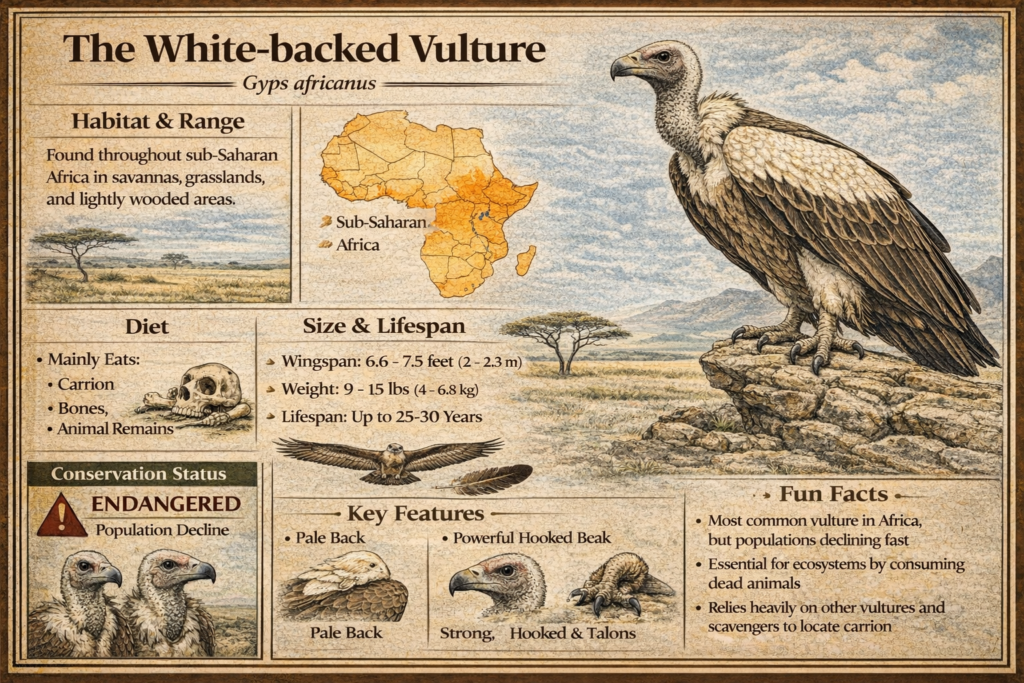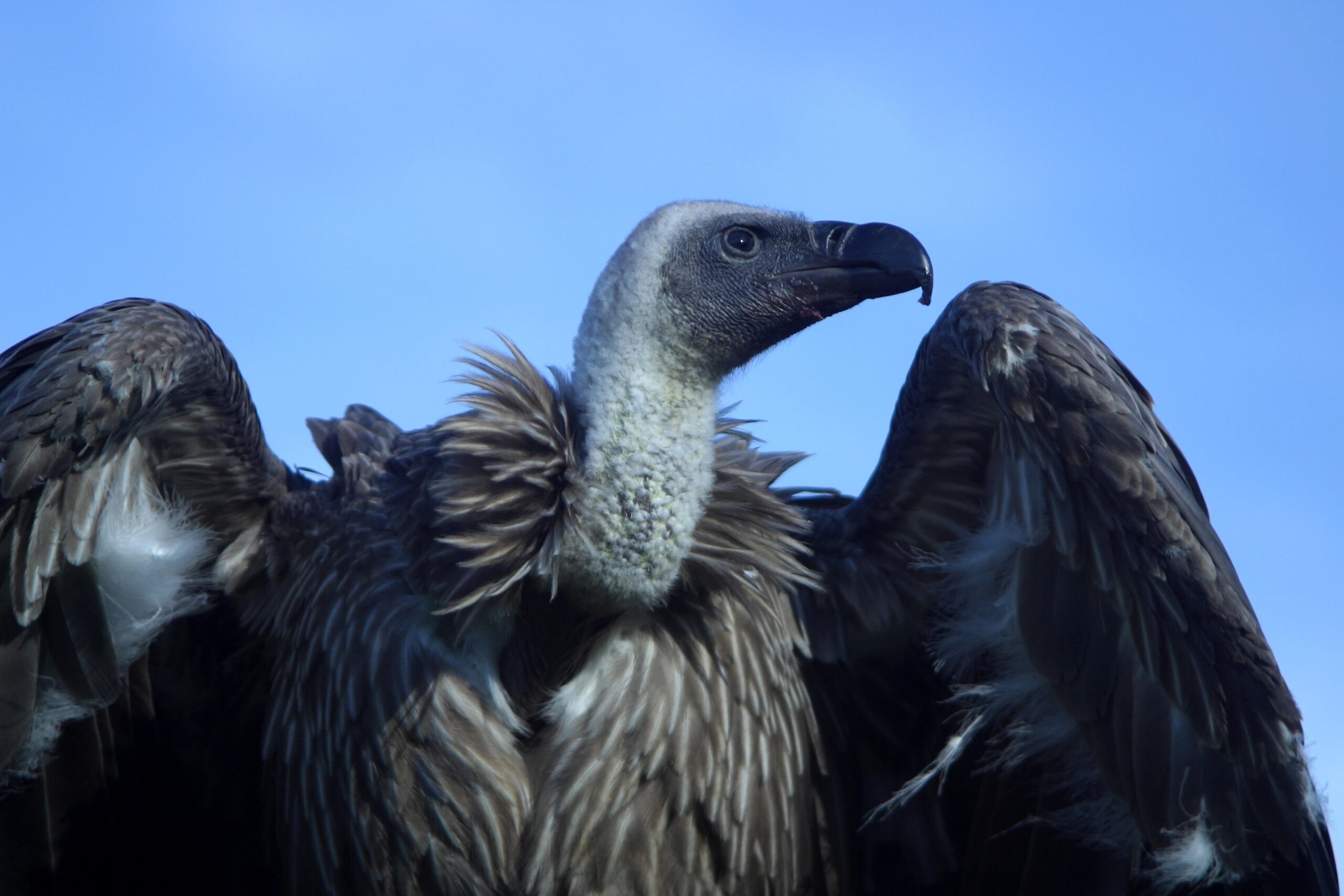
The White-backed Vulture is a medium-sized vulture of sub-Saharan Africa, recognized by its pale back, dark body, and hunched posture when perched. It is a critically endangered scavenger that depends heavily on keen eyesight to locate carrion from the air, often gathering in large groups at carcasses and playing a crucial role in maintaining ecosystem health by rapidly consuming animal remains.
Key Characteristics:
Appearance: Medium-sized with dark brown to black plumage contrasted by a distinctive white patch on the lower back, visible in flight. The head and neck are mostly bare with grayish to pink skin, an adaptation for hygiene while feeding. It has a strong, hooked beak suited for tearing flesh.
Senses: Excellent eyesight for detecting carcasses over long distances while soaring. Like most Old World vultures, it has a relatively weak sense of smell and relies primarily on vision and the behavior of other scavengers to find food.
Movement: Highly efficient soarer, using thermal updrafts to glide over vast areas with minimal effort. Often one of the first vultures to descend on a carcass and feeds quickly before larger species dominate.
Diet: Obligate scavenger (strictly carrion). Feeds mainly on soft tissues of dead animals and is capable of stripping carcasses rapidly when feeding in groups.
Behavior: Highly social, often seen soaring in flocks or gathering in large numbers at feeding sites. Nests colonially in tall trees, unlike many other vultures that nest alone.
Habitat: Widely distributed across sub-Saharan Africa. Prefers open savannas, grasslands, and lightly wooded areas, often near wildlife populations, but increasingly found near human-modified landscapes due to changing food availability.